
First day of school…new duds, almost ready to teach!

First day of school…new duds, almost ready to teach!
Summer is winding down fast, sadly. I am not (yet) mentally ready to step back into the classroom, but I’m getting there. Maybe this year I can give 100% to my classes. I know that sounds bad, but it’s the reality.
My attention has been divided due to the grad classes I have just finished. Any teacher out there can attest to the fact that a teacher must constantly multitask and prioritize. For the past two years, I have juggled two or three classes each semester. I spent the two years before that completing some Nebraska requirements. I have worked hard, but in a multitasking way.
This school year, I will focus fully on my students. It feels like a dream come true! Fellow teachers, you know what I mean. It will be exciting to put my knowledge into practice. I feel very optimistic about helping my students improve their Spanish this year. I will definitely be pushing them harder. People in our town will have to adjust to hearing me speak only Spanish to my students no matter where I see them. Some will be angered by it, but I know what is best for my students. If I don’t use what I’ve learned, what good was all the time I spent studying?
Teachers and parents, I’m talking to you! Are you listening to the same tunes as your kids (or students)? Are you hearing what they hear? My daughter and I get in the car, and the radio is always on. Sounds normal, right? I’ll admit to being entertained by a catchy beat. Then again, some songs are catchy only if I don’t hear the lyrics. Bad lyrics make some songs unfit for teen listening. I have heard lyrics so bad that I get embarrassed! (That’s hard to do!)
Think of some songs you’ve heard on the radio (or your iPod) lately. Now, sing a few bars of each. Stop singing when the song refers to sex or if you encounter a curse word. You just sing a few minutes and come back when you’re done. I’ll wait for you.
A few songs stand out (at least to me) for their offensiveness. Miley Cyrus songs are, in general, very crude. Rihanna doesn’t do any better. Then there’s Kesha, Pitbull (who should know better) and even Enrique Iglesias. Those are all offensive, but today’s winner for making me gag is Beyoncé’s Drunk in Love. Gross. Really listen to the lyrics and you’ll hear for yourself. Are we supposed to take her seriously? Pardon me while I puke.
What happened to morals? What happened to editing songs for tender ears? Why are we not doing a better job of protecting our kids? What is wrong with society?
Yes, I know teenagers are going to listen to provocative music. I also realize there’s a difference in singing about something and actually doing it. I understand that our kids want to “fit in” wherever they may be. I think we parents and teachers should keep telling them that “fitting in” might be easier than standing up for decency, but easy is not always right. We have to make sure good values are instilled in our children before they go out on their own.
We, the adults, are frighteningly aware of the world that awaits our young when they leave the nest. The media bombards us all with nudity, trashy music and a message that thin equals beautiful even if unhealthy habits create that skinny silhouette. Another message that is loud and clear to our kids is that sex equals love. Not true! Enough already!

Berty Segal Cook, a phenomenal teacher
If I had to describe Berty Segal Cook with just one word, it would be….DYNAMIC. She is, however, so much more! Inspirational, dedicated, magnificent and amazing are all words that easily describe her. Honestly, you may not understand just how amazing she is unless you attend one of her workshops and experience language learning with her. That’s how several language teachers spent the day. I had been looking forward to it for weeks! Many of my colleagues drove hours for the privilege if that tells you how respected she is in the field of second language acquisition. Berty flew in from California last night to conduct the training. She has presented workshops in 22 countries. Jan Coone organized everything, including breakfast and a wonderful lunch! It doesn’t get any better than that! Words can’t describe how rejuvenated and refreshed I am. I feel like I can make it to the end of the year! (Excuse me while I happy dance.)
We began the day with coffee and donuts, always a good move when you’re dealing with teachers. Berty started promptly at nine because she had a full day of activities for us. She explained the differences between the left brain and the right brain. My preferences lean strongly toward the left brain, meaning I am more “linear” in my thinking, and I see details that make up the big picture. I need to take notes and figure out verbs! In many cases, this causes a lot of stress, especially for language leaners. Those “right brain” people can take in the whole of something and use the senses to absorb what is happening around them. I learned that by using right brain activities, intelligence is actually increased! Activating the right brain also determines long-term retention. Berty was able to prove that without a doubt. She indulged our left brains and cited the work of Asher, Krashen and Terrell. She allowed us to make a few notations in our handout, but not many. That was hard for me as a left brain thinker. When she started our lesson by teaching commands in Yiddish, I thought my left brain was going to have a seizure!
Yes, you read correctly—Yiddish (her first language). Berty would take breaks from the commands and let us stretch our legs and get coffee, discuss other aspects of language learning and come back to the commands. After three or four hours, all of us remembered what to do even without her modeling the command for us! She expected all of us to get immersed and involved, so we took turns throughout the day being examples for her lessons. I was chosen (along with four others) for the clothing description activity. I was first in line, so she started by describing my long hair, glasses and blue Cinco de Mayo shirt. Then things got exciting. She lifted my foot about 18 inches off the floor. I quickly grabbed the shoulder of Emily (to my left). My other hand landed on Berty’s back. She paused and asked if I had problems with my legs. My response: Not until today! She went down the line describing each of us. Then she asked the “class” to point out who was being described as she listed characteristics she had mentioned. All the participants were able to understand and be successful! Now we have to change our methods to reflect what we learned.
We were lucky enough to be able to order Berty’s books, and she was kind enough to have Jan copy lessons we can use as resources while we wait for our books. I don’t know about my colleagues, but I will be putting our text books on the shelf as of tomorrow. My kids and I need to have some fun with learning again.
To find out more, see Berty’s website (below). If you have the chance to sit in while she demonstrates her lessons, do yourself and your students a favor and GO! We need Berty in teacher prep classes at the college level! Jan Coone also has a great website for teachers. You can find it below as well. This was a day well spent.
I was searching for a way to help my students understand how hard life can be in Mexico when I had a pretty fun idea. Depending on the size of my class, students work in pairs (or groups of three or four). Each group of students is considered a family unit and receives one index card telling them what they earn and the job(s) they do. Also included are the monthly expenses. Sometimes daily expenses are included, especially if someone in the family unit works in the city. Bus fare would be a daily expense to get to work. Here are some examples of the cards I have made.
Card 1: You are a single parent with two children. Your mother lives with you. You work in the city as a housekeeper and earn 200 pesos a day. You work four days a week. You have to pay the following bills: electricity 150 pesos/month, cable 100 pesos/month, bottled water 16 pesos each, bank payment 100 pesos/month, bus fare 24 pesos daily.
Card 2: You and your wife have four children. All attend school. You drive a tricitaxi in the village and earn 100 pesos a day. You can earn 200 pesos on Sunday if you decide to work seven days a week instead of six. Your wife does laundry and charges 25 pesos per dozen. Your bills include: electricity 200 pesos/month, cable 100 pesos/month, bottled water 16 pesos each, furniture payment 300 pesos/month.
Card 3: You are a single parent with one child in school. You work as a teacher in the city and earn 3000 pesos every two weeks. Your bills include electricity 250 pesos/month, cable 100 pesos/month, bus fare 24 pesos daily, bottled water 16 pesos each.
There are more cards, but you get the general idea. I try to mix decent jobs in with some unskilled labor so students get a picture of how I lived and how others there still live.
The bottled water refers to a large bottle like you see in many offices. I include it because the “agua potable” isn’t so good for drinking. My neighbor gave her kids medicine to kill internal parasites that come from drinking water that is not bottled. You should hear the students when I explain that to them! Bus fare applies to those working in the city. Sometimes people spend more on bus fare if the job is a long way from downtown. The 24 pesos cover a round-trip ticket from a village to the downtown area in the city.
Once the cards are distributed to the groups, I then issue the challenge. Students have to budget their pesos to feed the family they have been given as well as pay all the bills. They must make a menu for a month and account for every peso spent or saved. I, of course, post a list of the latest prices for food and other household necessities to assist them while they plan. The students usually are able to figure out a reasonable budget and plan for food. At this point, they are thinking how easy it was to do.
That’s when I have each group draw an “emergency card.” (I always snicker when these are chosen. I’m about to blow their budget to pieces!) One example of an emergency card: You agreed to be padrinos for a quince party. You must pay 2000 pesos for the cake. Another emergency might be: Your home needs repairs immediately. Pay 1500 pesos for supplies and labor.
Students then have to make their earnings stretch to cover these unexpected expenses. They get to decide what they can do without or come up with a plan to earn some extra pesos.
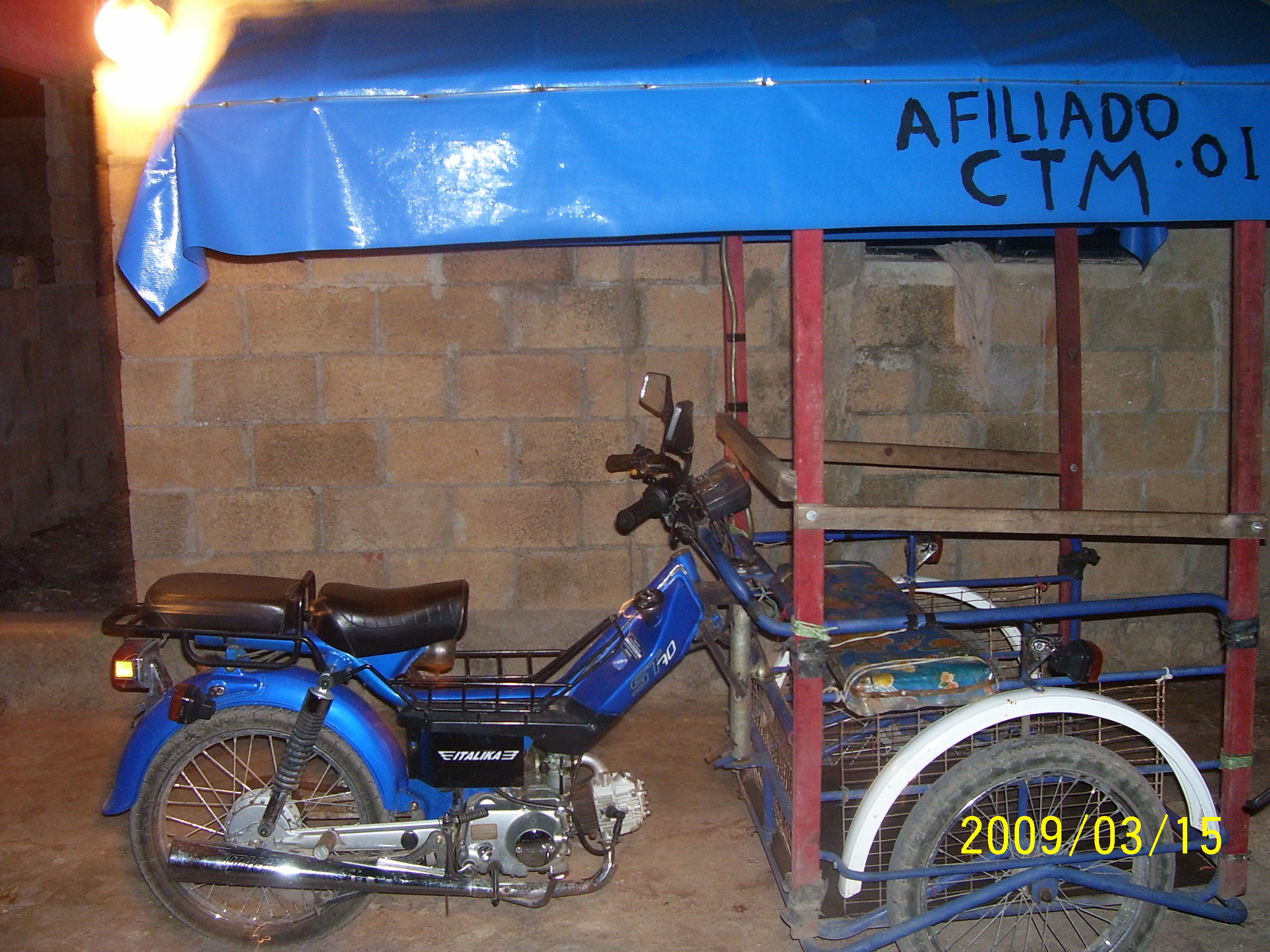
Tricitaxi
An English translation of Yoani Sánchez's blog Generación Y, from Havana, Cuba
Deja tu huella en el mundo
by Bob Moats - Author of Murder Novels
We do product reviews for the intentional family!
Supporting the local community
Fresh Randomness
That's right! I write!
Making learning fun
live, love & laugh lots!
A site to discuss education and democracy
Canine Behavior & Training, Board and Train, Seminars, Private Lessons
Nurse, Wife, Mother, Passionate Home Cook, Joyful Oversharer
@ale_ksandra00
by @dr_dmd
Author and journalist
formerly Charming Farming

 Ramblings of a Perforated Mind