
Workshop!

Berty Segal Cook, a phenomenal teacher

Berty Segal Cook, a phenomenal teacher

If I had to describe Berty Segal Cook with just one word, it would be….DYNAMIC. She is, however, so much more! Inspirational, dedicated, magnificent and amazing are all words that easily describe her. Honestly, you may not understand just how amazing she is unless you attend one of her workshops and experience language learning with her. That’s how several language teachers spent the day. I had been looking forward to it for weeks! Many of my colleagues drove hours for the privilege if that tells you how respected she is in the field of second language acquisition. Berty flew in from California last night to conduct the training. She has presented workshops in 22 countries. Jan Coone organized everything, including breakfast and a wonderful lunch! It doesn’t get any better than that! Words can’t describe how rejuvenated and refreshed I am. I feel like I can make it to the end of the year! (Excuse me while I happy dance.)

We began the day with coffee and donuts, always a good move when you’re dealing with teachers. Berty started promptly at nine because she had a full day of activities for us. She explained the differences between the left brain and the right brain. My preferences lean strongly toward the left brain, meaning I am more “linear” in my thinking, and I see details that make up the big picture. I need to take notes and figure out verbs! In many cases, this causes a lot of stress, especially for language leaners. Those “right brain” people can take in the whole of something and use the senses to absorb what is happening around them. I learned that by using right brain activities, intelligence is actually increased! Activating the right brain also determines long-term retention. Berty was able to prove that without a doubt. She indulged our left brains and cited the work of Asher, Krashen and Terrell. She allowed us to make a few notations in our handout, but not many. That was hard for me as a left brain thinker. When she started our lesson by teaching commands in Yiddish, I thought my left brain was going to have a seizure!

Yes, you read correctly—Yiddish (her first language). Berty would take breaks from the commands and let us stretch our legs and get coffee, discuss other aspects of language learning and come back to the commands. After three or four hours, all of us remembered what to do even without her modeling the command for us! She expected all of us to get immersed and involved, so we took turns throughout the day being examples for her lessons. I was chosen (along with four others) for the clothing description activity. I was first in line, so she started by describing my long hair, glasses and blue Cinco de Mayo shirt. Then things got exciting. She lifted my foot about 18 inches off the floor. I quickly grabbed the shoulder of Emily (to my left). My other hand landed on Berty’s back. She paused and asked if I had problems with my legs. My response: Not until today! She went down the line describing each of us. Then she asked the “class” to point out who was being described as she listed characteristics she had mentioned. All the participants were able to understand and be successful! Now we have to change our methods to reflect what we learned.

We were lucky enough to be able to order Berty’s books, and she was kind enough to have Jan copy lessons we can use as resources while we wait for our books. I don’t know about my colleagues, but I will be putting our text books on the shelf as of tomorrow. My kids and I need to have some fun with learning again.

To find out more, see Berty’s website (below). If you have the chance to sit in while she demonstrates her lessons, do yourself and your students a favor and GO! We need Berty in teacher prep classes at the college level! Jan Coone also has a great website for teachers. You can find it below as well. This was a day well spent.

http://www.tprsource.com/
http://jansconsulting.info/
Weekend Bloggy Reading

Missing Mexico

Wow. Today was pretty darn good! Just being Friday (which means early release) put today a step above the rest. One class had an all-time best for vocabulary, so they got to play basketball for almost 20 glorious minutes. How does it get better than that? My small Spanish class of seventh graders had an even better time. We were lucky enough to Skype with one of my former bosses in Mexico. (Mrs. Cochran made it possible with the camera and microphone.)

The kids loved chatting with Joe, and so did I. After the call ended, though, I felt an unexpected moment of sadness. Just seeing the familiar buildings and faces made me realize how much I miss being there. I remembered everything…..the banana tree in the back patio, the classrooms, the street in front of the school. Simply describing things to my students is just not enough. They need to SEE it all. The entire class is willing to visit Joe and check out life in Mexico.

The kids learned that Joe has been in Merida for the last 20 years. He owns and operates the American English Center. According to Joe, more students study at his school than before. It’s good to know his business is growing. Joe’s a top-notch boss as well as a great friend. His home state (Texas) should be proud of him. At least I’m sure he’ll go down in history with my young students.

Weekend Bloggy Reading

Spanish Class Activity

I was searching for a way to help my students understand how hard life can be in Mexico when I had a pretty fun idea. Depending on the size of my class, students work in pairs (or groups of three or four). Each group of students is considered a family unit and receives one index card telling them what they earn and the job(s) they do. Also included are the monthly expenses. Sometimes daily expenses are included, especially if someone in the family unit works in the city. Bus fare would be a daily expense to get to work. Here are some examples of the cards I have made.

Card 1: You are a single parent with two children. Your mother lives with you. You work in the city as a housekeeper and earn 200 pesos a day. You work four days a week. You have to pay the following bills: electricity 150 pesos/month, cable 100 pesos/month, bottled water 16 pesos each, bank payment 100 pesos/month, bus fare 24 pesos daily.

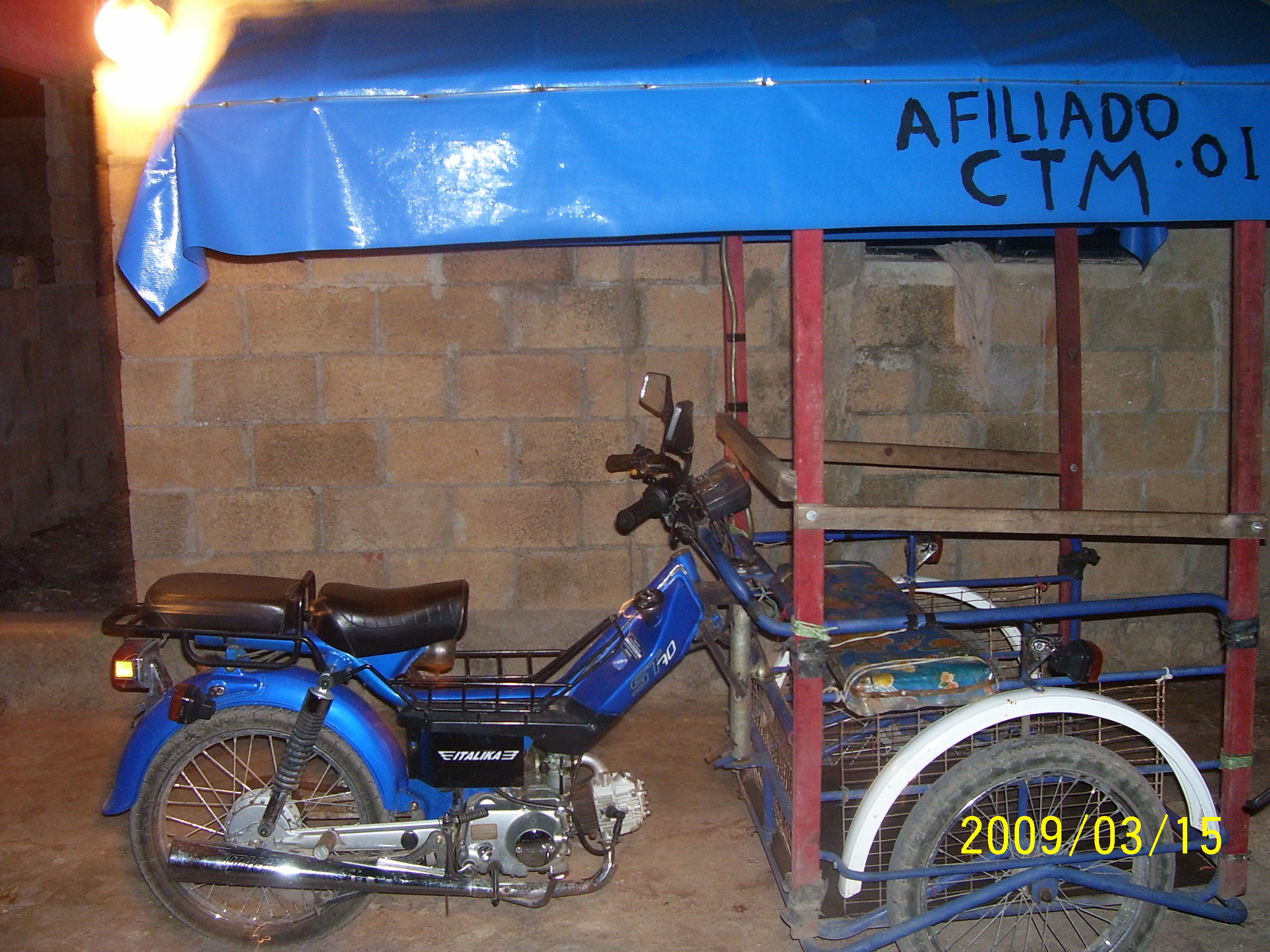
Card 2: You and your wife have four children. All attend school. You drive a tricitaxi in the village and earn 100 pesos a day. You can earn 200 pesos on Sunday if you decide to work seven days a week instead of six. Your wife does laundry and charges 25 pesos per dozen. Your bills include: electricity 200 pesos/month, cable 100 pesos/month, bottled water 16 pesos each, furniture payment 300 pesos/month.

Card 3: You are a single parent with one child in school. You work as a teacher in the city and earn 3000 pesos every two weeks. Your bills include electricity 250 pesos/month, cable 100 pesos/month, bus fare 24 pesos daily, bottled water 16 pesos each.

There are more cards, but you get the general idea. I try to mix decent jobs in with some unskilled labor so students get a picture of how I lived and how others there still live.

The bottled water refers to a large bottle like you see in many offices. I include it because the “agua potable” isn’t so good for drinking. My neighbor gave her kids medicine to kill internal parasites that come from drinking water that is not bottled. You should hear the students when I explain that to them! Bus fare applies to those working in the city. Sometimes people spend more on bus fare if the job is a long way from downtown. The 24 pesos cover a round-trip ticket from a village to the downtown area in the city.

Once the cards are distributed to the groups, I then issue the challenge. Students have to budget their pesos to feed the family they have been given as well as pay all the bills. They must make a menu for a month and account for every peso spent or saved. I, of course, post a list of the latest prices for food and other household necessities to assist them while they plan. The students usually are able to figure out a reasonable budget and plan for food. At this point, they are thinking how easy it was to do.

That’s when I have each group draw an “emergency card.” (I always snicker when these are chosen. I’m about to blow their budget to pieces!) One example of an emergency card: You agreed to be padrinos for a quince party. You must pay 2000 pesos for the cake. Another emergency might be: Your home needs repairs immediately. Pay 1500 pesos for supplies and labor.

Students then have to make their earnings stretch to cover these unexpected expenses. They get to decide what they can do without or come up with a plan to earn some extra pesos.

Tricitaxi

Tricitaxi

Fired Up in the Land of the Free

Yes, I am fired up today! I have some things to tell small-town America…things they might not want to read. Let me preface my remarks by stating very clearly: I love living in my small, rural town. It is a great place to raise my daughter, and we feel safe here. I appreciate all the kindness from the people in this Nebraska town. Thank you for accepting us.

This should come as no surprise to people who know me in this town, but I have to say it all anyway. I ask your indulgence. I am a Spanish teacher. I live and breathe the language. I was actually HIRED to speak Spanish and to teach it to your children and grandchildren. The reality is that when I see one of my students around town, I may actually speak to the student (gasp!) IN SPANISH. You should be proud when your student answers in Spanish–or even if the student gives an answer in English that shows he or she understood my comment! The absolute wrong thing to do is tell me to speak English because I’m in America. Why? Keep reading.

My job is to broaden my students’ horizons and to teach them the joy of speaking a second language. It allows the students to experience other cultures and think in different ways. I would also like to point out something you may not realize—the United States does not have an official language. The reality is that America is home to many cultures and languages. Your language is not the ONLY language. Your way, my friend, is not the ONLY way. Your beliefs are not the ONLY beliefs. My job is to help small-town students be ready to move from life in rural America (where people are mostly similar) to a global environment where speaking English and Spanish (or French, Chinese, etc.) could make the difference in dollars later.

If you are uncomfortable with my language skills, ask yourself why. What hidden issues do YOU have that make you feel that way? What prejudices do YOU have in your heart of hearts? Are you afraid you are the topic of discussion if you don’t understand the conversation? (I can assure you, that is usually not the case; it’s human nature to feel that way.)

A short while ago, some community members were upset that my students can recite the Pledge of Allegiance in Spanish. Why? Shouldn’t the focus really be on the honor and commitment of people to the flag no matter what language is used? I received a kind, supportive email from a veteran in our community who believes the language isn’t as important as the respect given to the flag. He is one of our nation’s heroes because he served the United States with honor and pride. Other community members might view me as unpatriotic because we say the Pledge in Spanish, but it’s not the case. My students willingly make cards for deployed servicemen and women, so your argument is not a valid one. My classes even have two adopted Spanish-speaking soldiers. Everything we do is somehow related to my subject matter whether it’s saying the Pledge or making cards to send. The sentiment is more important than the language. Do us all a favor and focus on the big picture. Understand that I care about your children, and I want them to learn as much as possible. I want them prepared for a bright future. Only education across the curriculum can do that. Trust me to DO MY JOB. After all, it’s why I was hired.

I think sometimes people just need something to complain about or they aren’t happy. My advice to those folks: pick a topic and go to it! It won’t keep me from doing my job anyway.

Old Glory

Old Glory

Cleanliness…yes, please!

Do you notice who does (or does not) wash hands in the bathroom? Somehow my girls in one of my classes ended up discussing hand washing while I was multitasking one day. The following dialogue (names changed to protect the guilty) is what I heard:

Susie: I don’t always wash my hands in the bath room.
Georgette: Me either. I don’t always “feel the vibe.”
Lorrie: I always do at home because I have this cool, foamy soap I love. But not here.

My multitasking screeched to a halt. This needed my full attention. RIGHT AWAY! The boys and I sat in shocked silence for a moment. Someone apparently noticed my curled top lip and read it correctly—I was a bit disgusted. I would have thought all my kids (especially the girls) would wash up. Wow. One girl explained that only her butt touches the “dirty” seat, and she touches nothing else because she’s careful.

I have been trained as a CNA, so I know the best way to prevent the spread of infection is HAND WASHING! You should wash your hands for as long as it takes you to sing the alphabet. Don’t touch the sink while you do it. Dry your hands well, and use a paper towel to open the door.

Evaluate this scene: You use the bath room and do not wash your hands. You then touch the door handle—where others who do not wash hands have also touched. You go to class and turn in a paper to your (beloved) teacher. Your dear teacher has been contaminated through not fault of her own! Oh, no!

This teacher now plans to spray any and all collected homework with Lysol and bathe in hand sanitizer. What about you?

War News

I have noticed a decrease in insults! It took a few detention sessions for three or four students, but I am slowly seeing a change. The kids called a foul on me a couple of times. This is why: One student called another a name. Before I could process the insult and react, the offended student shot an insult back, so they BOTH had detention. After-school detention gave us a few minutes to chat. I asked that the guys give me time to process before automatically shooting a remark back to the offending student. That way, at least one of them would be in the right. They agreed to try it my way, and it’s been a quiet week—yes, I know it’s only Tuesday! As you can tell, it’s the small things that make me the happiest.

UPDATE! The insults have slowed dramatically. I conclude that the students are getting the point. We have been able to play more games and have a little fun. Whew! I sure feel better.